
Walk along most distribution networks in Southern Africa and you’ll find the same quiet problem: pipes running at far more pressure than they need, day and night, whether anyone is drawing water or not. It rarely makes the incident report. It shows up months later, as a burst main, a corroded joint, or a bulk meter reading that never quite matches what utilities bill for.
At Metsi Supplies, pressure management is where a lot of our waterworks conversations start — because it’s usually the fastest way to cut both.
What “non-revenue water” actually costs
Non-revenue water — treated water that’s produced but never billed, whether through leaks, bursts, or metering error — is one of the largest hidden line items on a utility’s balance sheet. Every bar of unnecessary pressure in the network accelerates it in three ways:
- Leakage scales with pressure. A pipe under excess pressure doesn’t just leak faster at existing cracks — the relationship is closer to exponential than linear, especially through small joint failures and weeping fittings that never show up on a patrol.
- Bursts become more frequent. Pressure surges and transients fatigue pipe walls and joints over time, turning a slow leak into a full failure — usually at the worst possible moment.
- Asset life shortens. Valves, meters, and fittings rated for a certain working pressure wear out faster when they’re routinely operating near or above that rating.
None of this shows up as a single dramatic failure. It shows up as a maintenance budget that never quite balances.
The fix is usually simpler than the diagnosis
This is the part that tends to surprise people: correcting the pressure is often more straightforward than finding where it’s costing you. A well-specified control valve can hold a zone at exactly the pressure it needs — no more — and adjust automatically as demand shifts through the day.
Our Cla-Val range covers this from a single reducing valve to a fully telemetered zone:
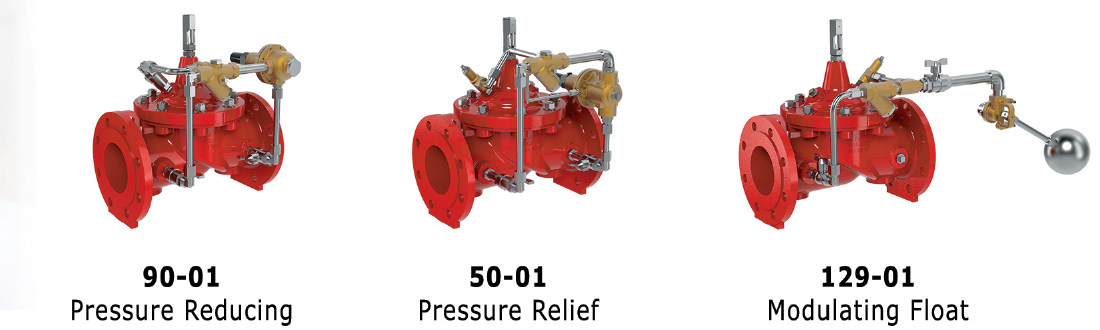
- PCM 90-01 (Pressure Reducing, Valve Actuated) and PCM 50-01 (Pressure Sustaining) handle the fundamentals — capping downstream pressure or protecting upstream supply, without any electronics required.
- 98-07 (2-Stage Pressure Management) and Eco 90-36 (Dual-Stage Modulation) step pressure down further during low-demand periods, typically overnight, when a network needs the least push but often gets the most.
- MD 35-99-01 and D35-90-36 move into time- and flow-based modulation — the valve reads the network’s actual demand pattern and adjusts continuously, rather than sitting at one fixed setpoint.
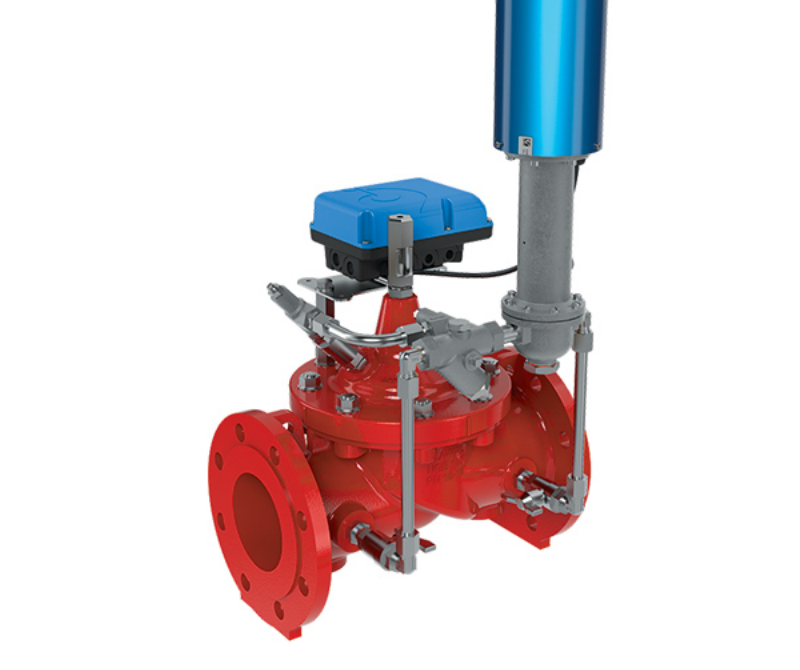
- CV-Log-35 and D22 add the data layer: logging pressure and flow remotely, so a utility can see the effect of a change without sending a team back to site to check.
The right answer depends on the zone — its demand pattern, its elevation profile, whether it’s fed by gravity or pumped — which is exactly why this tends to be a specification conversation rather than a catalogue order.
Built for Southern African networks specifically
Cla-Val’s control valves are proven across some of the most demanding waterworks, mining, industrial, and fire protection systems in the world — but the right pressure management strategy for a coastal municipal network doesn’t look like the right one for a mining site on the Botswana plateau or an informal settlement’s ageing reticulation. As the appointed regional agent, our role is translating that global product range into a solution that fits local elevation, demand, and infrastructure realities — and standing behind it with local stock, support, and service.
Where to start
If you manage a network and aren’t sure how much of your non-revenue water is pressure-driven, the honest answer is: you probably won’t know until you measure it. A short pressure-logging exercise on a representative zone is usually enough to show whether a reducing valve pays for itself in months or years.
Get in touch with our Botswana or South Africa team to talk through your network, and we’ll help you figure out where pressure management would move the needle first.